Many years ago a friend wrote a story featuring Lilac trees. We objected that lilacs were shrubs, not trees, but apparently we weren’t aware of Syringa reticulata, or the Japanese tree lilac. A similar tree, the Peking tree lilac was at one time considered a separate species Syringa pekinensis although some now consider it subspecies of the Japanese Lilac tree.
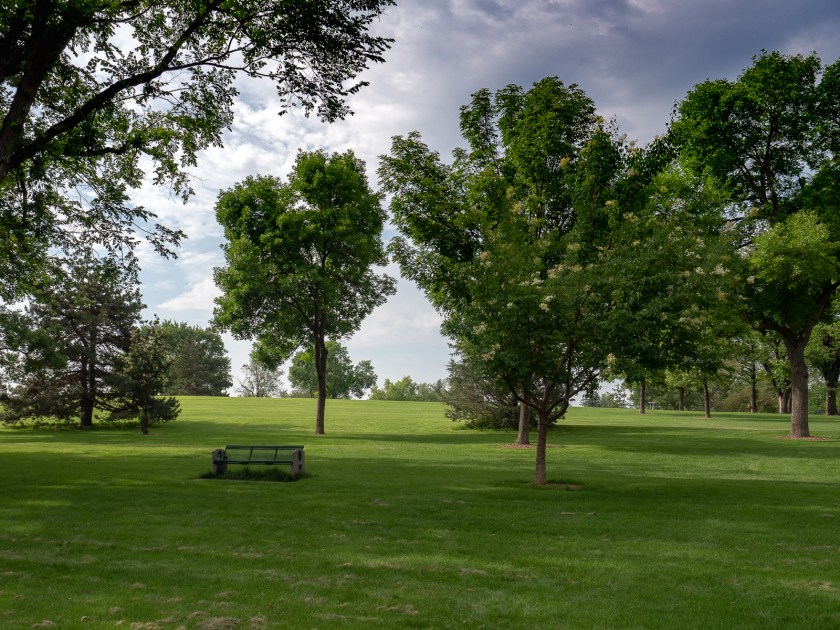
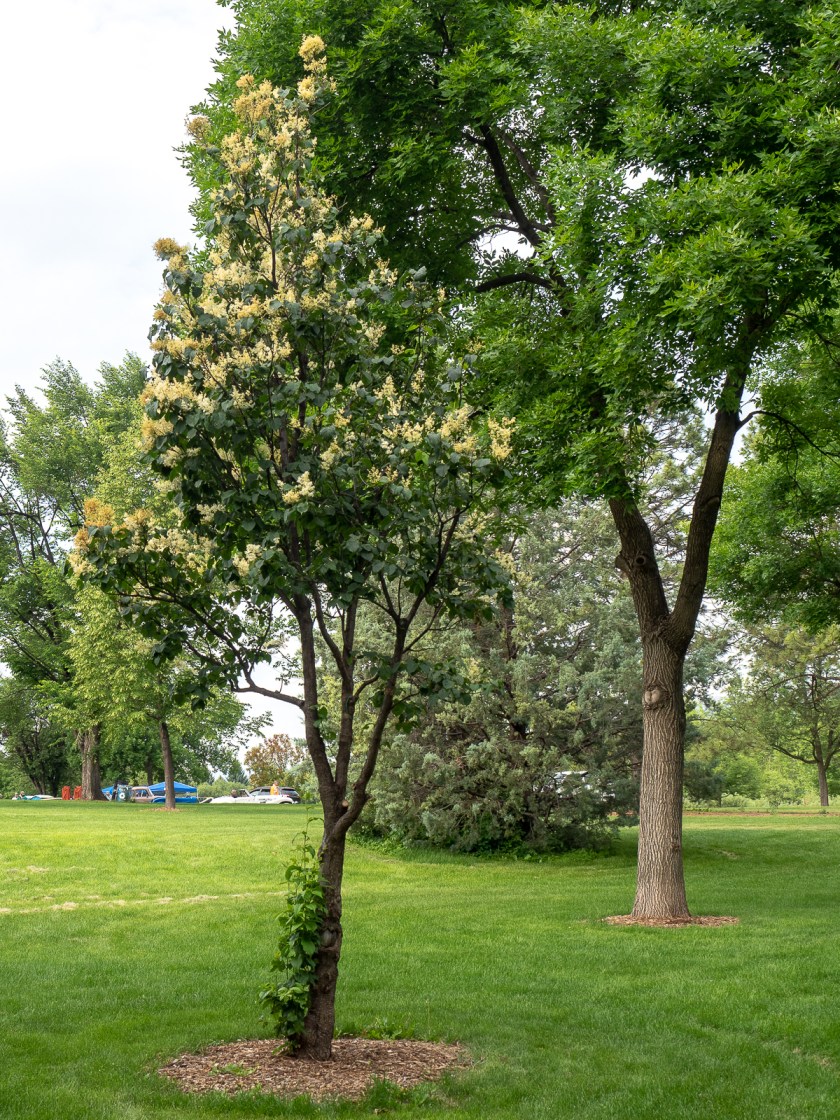
Peking tree lilac to the right of the bench. Smaller Japanese tree lilac to the left blends in with the larger tree behind it.
Both trees have origins in Asia, most notably Japan, China, Korea, and a part of Russia. Possibly Japanese tree lilac is more common in the United States. The USDA lists it primarily as a tree introduced in New York, three New England states and Wyoming! The national champion tree is found in Massachusetts. Oddly, according to the USDA, the Peking version has only been introduced into Pennsylvania. Most sources mention the trees are often used as landscape accents and street trees. There are numerous Japanese Tree Lilacs in New York City, with fewer Peking Tree Lilacs. The Japanese variety is a featured tree in Central Park.
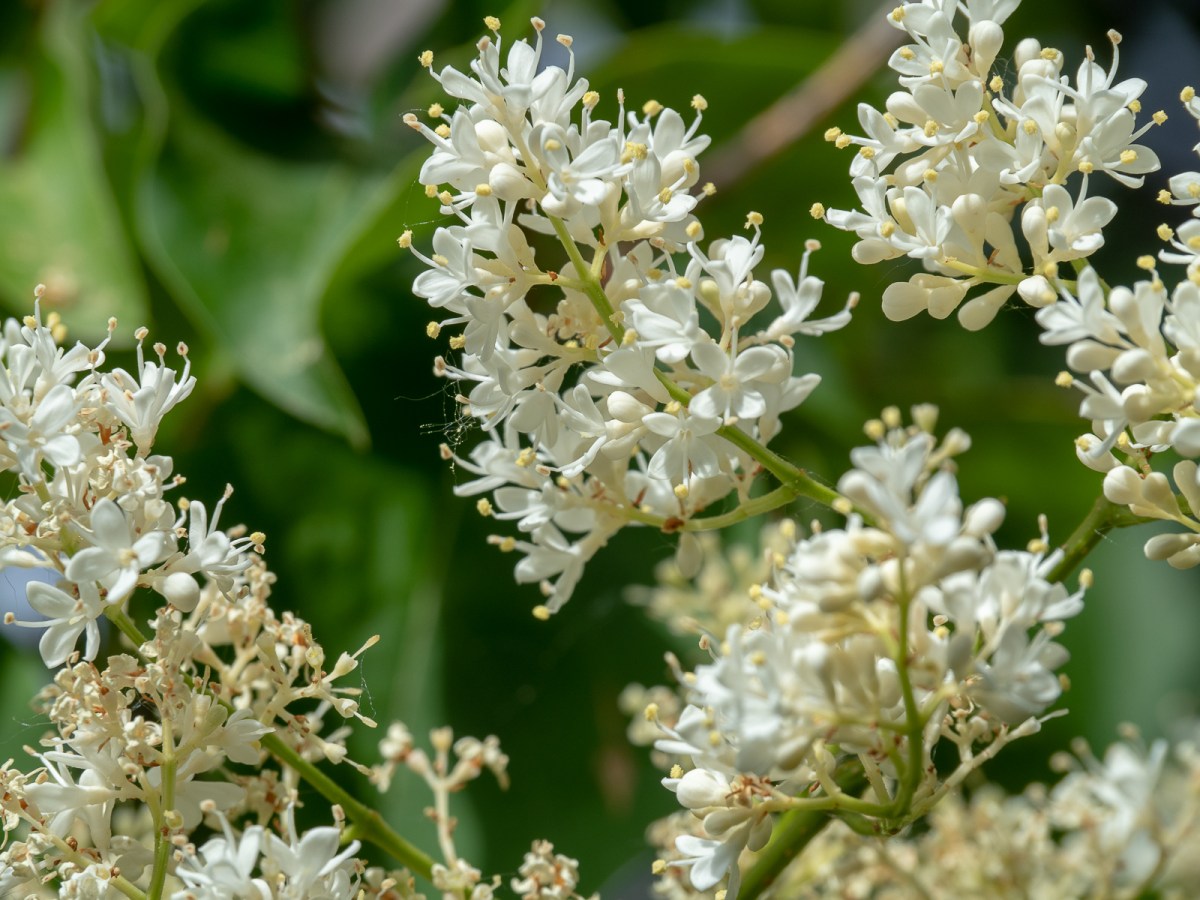
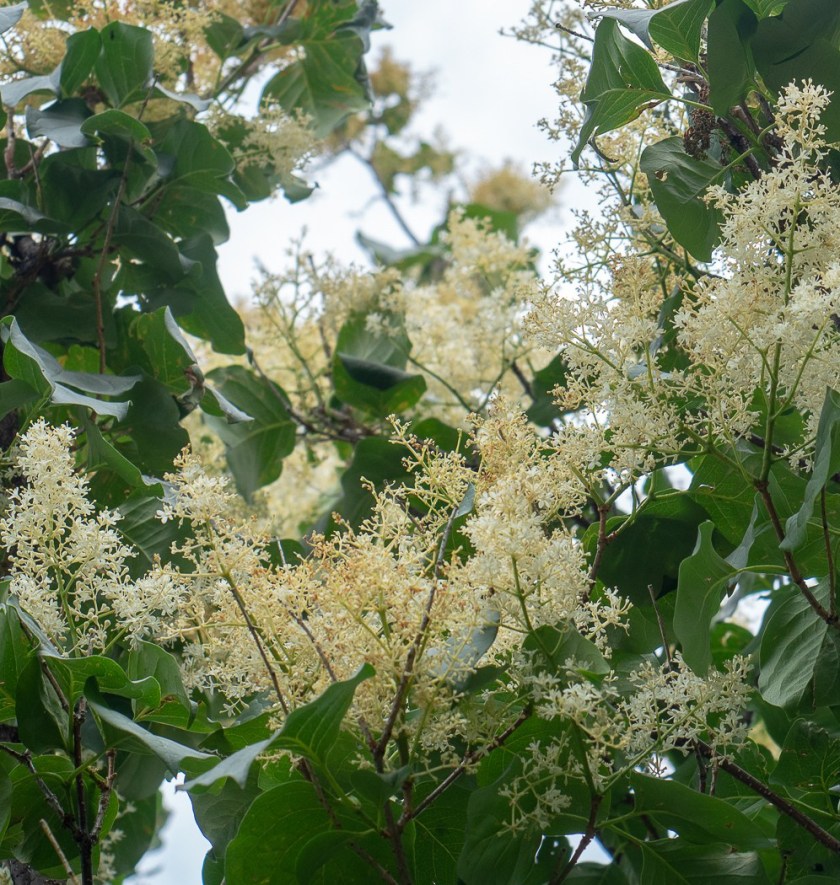
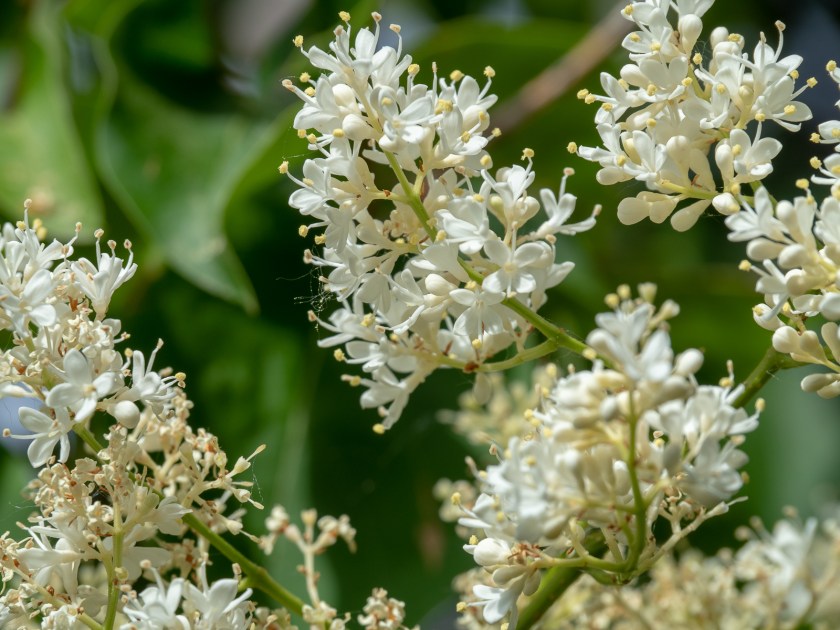
Flower sprays of the Japanese tree lilac
The genus Syringa includes the common lilac as well as about thirty other varieties. The Japanese tree lilac is said to be the only member of the genus that attains tree status. This would seem accurate if the Peking tree lilac is considered a subspecies.
The later blooming of the white flowers appears to be the main attraction of these trees, although they are also said to be drought and pollution resistant. The trees in Fort Collins have been flowering for a week or so, making them concurrent with the Catalpas. Larger trees are also valued for their shade canopy.
Close up of a Japanese tree lilac
Various authors disagree about the scent of the trees, some saying it is unpleasant, others that it has little to no odor and others saying the Peking tree scent is that of honey. Before the trees stop blooming, you’ll have to smell for yourself and decide.
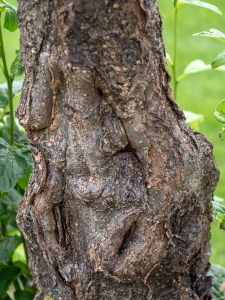
The major difference between the two varieties seems to be the bark, with that of the Chinese Tree Lilac, an alternate name along with Pekin Tree for the obvious specimen, being reddish and peeling later in the year. The strips of bark look to me like someone has wrapped the tree in packing tape.
Bark of the Peking Tree Lilac
As with many other aspects of trees, there is controversy over this small species. Some sources are concerned the trees are invasive. Other areas of the country from cities in Massachusetts to the state of Wyoming note them as underused trees.Illinois considers the Japanese Lilac Tree as low risk of invasiveness.
Gnarly trunk of the Japanese tree lilac
To find the marked trees in the park, turn from Mulberry Street onto Sheldon Drive and park close to the intersection with City Park Drive in front of the Arm Walking exercise station. Directly east are the two trees pictured in the photo with the bench. C181 Japanese Tree Lilac (Syringa reticulata) is the smaller tree to the south. The larger tree to the north of the bench is C187 Peking Tree Lilac (Syringa pekinensis). A larger version of the latter tree, D212, which I believe was planted in the 1960s, can be seen on the northwest corner of Mulberry and Sheldon.
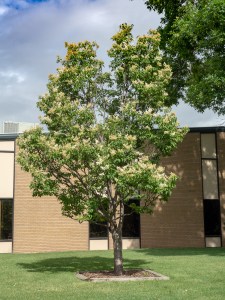
A cultivar of the Japanese tree lilac, E4 Ivory Silk Japanese Tree Lilac (Syringa reticulata Ivory Silk)
Japanese tree lilac Ivory Silk
is viewable in front of the Parks Department building at 413 S. Bryan. This memorial tree is directly in front of the building. The state of Washington suggests this variety as a smart addition to the Pacific Northwest Garden.
The World Conker Championships have been held since 1965.
Horsechestnuts(Aesculus hippocastanum), also known as Conker Tree in England, are in the same genus as Buckeyes. Both are part of the same order as the Soapberry tree.
These trees are planted as street trees for ornamentation as well as shade. Both the National Audubon Society Field Guide to North American Trees and North American Trees (Preston and Braham, 2002) report them as “escaped.” The USDA maps show them as introduced in both the East and the Northwest. The tree originated in the Balkans but has been planted widely throughout Europe and other parts of the world. They may have been introduced in the United States as early as 1576.
Monumental trees lists the widest trunked tree in England, the tallest at over 120 feet in the Netherlands, and the oldest as a specimen in France, which might be as old as 500 years. The leaves are palmate, radiating out from a central point. This species isn’t listed in the National Forest Registry, but the Colorado Tree Coalition lists the largest and tallest tree in the state as one in Cedaredge. The largest Red Horsechestnut can be found in Denver.
The leaflets radiate from a central post
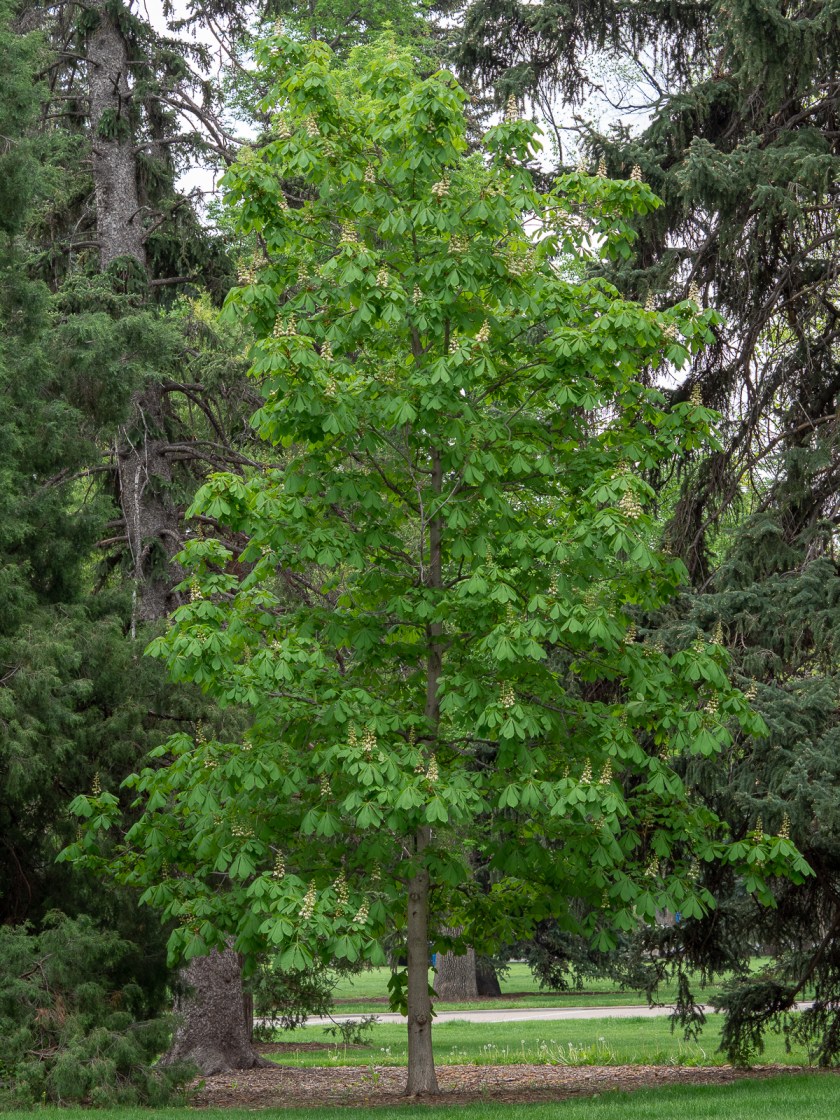
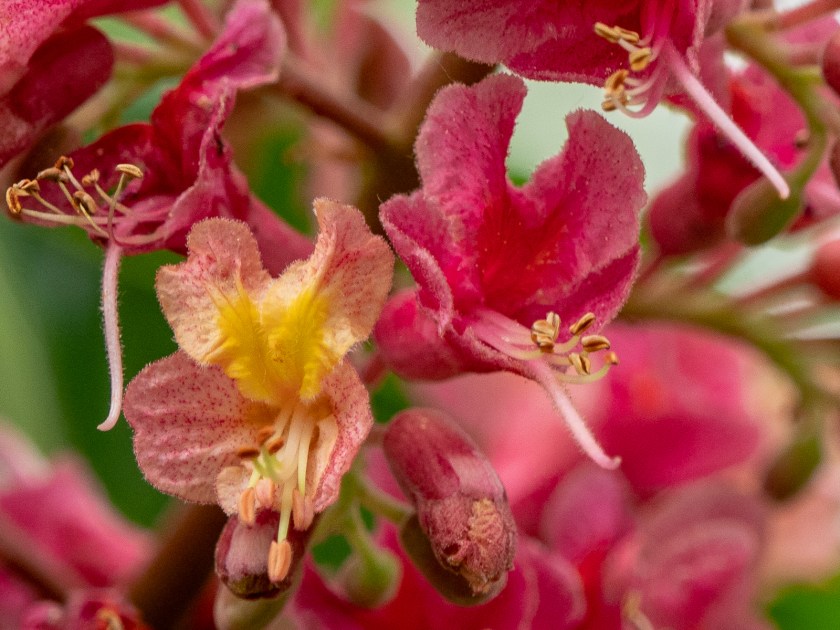
The trees flower in May in what look like cones of white flowers. Sibley reports the interior yellow spots turn red when fertilized. The fertilized flowers produce what are known as conkers, or the “nut.” This is NOT the same as a sweet chestnut, and the outer casings look quite different. The two should not be confused as conkers are considered poisonous to humans, although they may be edible once boiled. Sweet chestnuts are encased in a spiny looking ball while the outer coating of a horse chestnut looks like bumpy leather. The interior “nuts” look similar but the edible version has a discernible and palpable point while the poisonous conkers are flat. Horsechestnuts are edible for many animals and are fed to horses and other livestock.
Apparently horsechestnuts are used in homeopathy. They are touted as useful for various circulatory problems such as venous insufficiency, phlebitis, and varicose veins when properly prepared. The leaves and bark may also be useful in a number of other conditions. Lupus is mentioned.
As they are not native to North America or The British Isles, there aren’t many myths associated with them. There is a game played in England called Conkers. This game is reported to have been a favorite of Roald Dahl. Currently, Britain’s trees are threatened by a combination of moths and disease. The loss of the trees may impact the World Conker Championship, which has been held in Northampton since 1965.
A notable characteristic of the Horsechestnut are the distinctive winter buds, which are large and sticky.
Below is a short video about the Horse Chestnut in the United States.
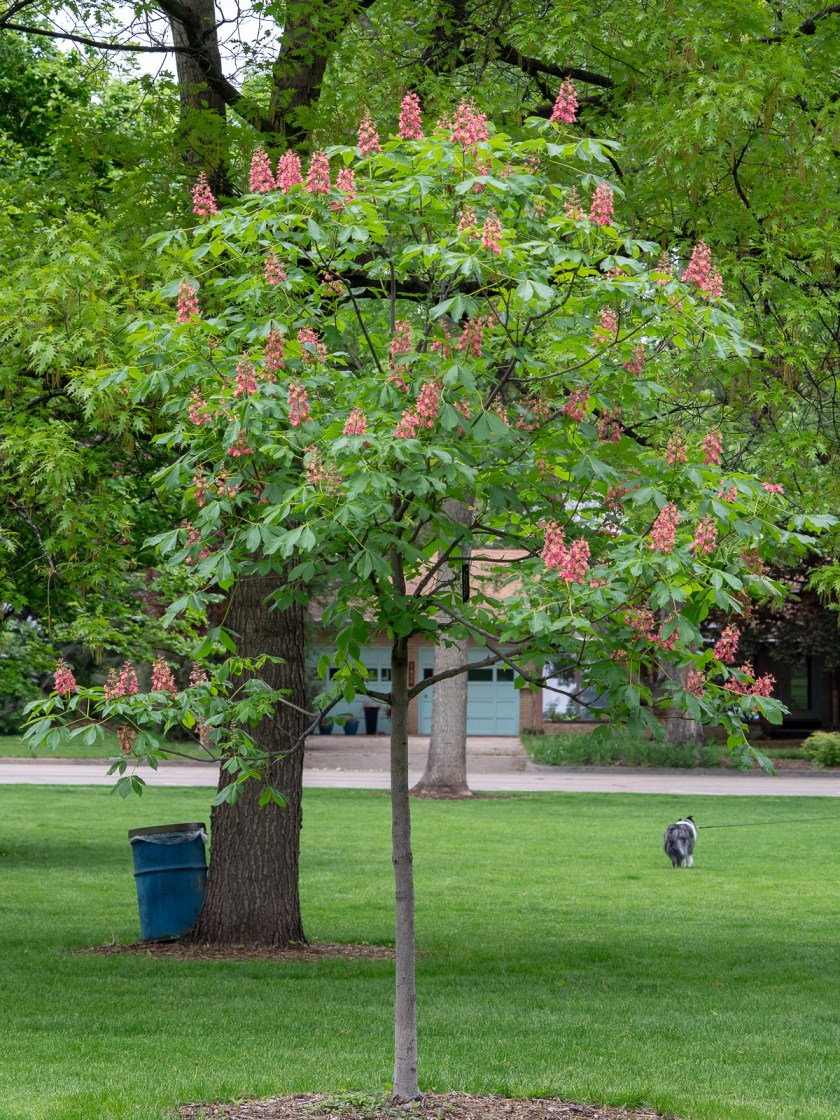
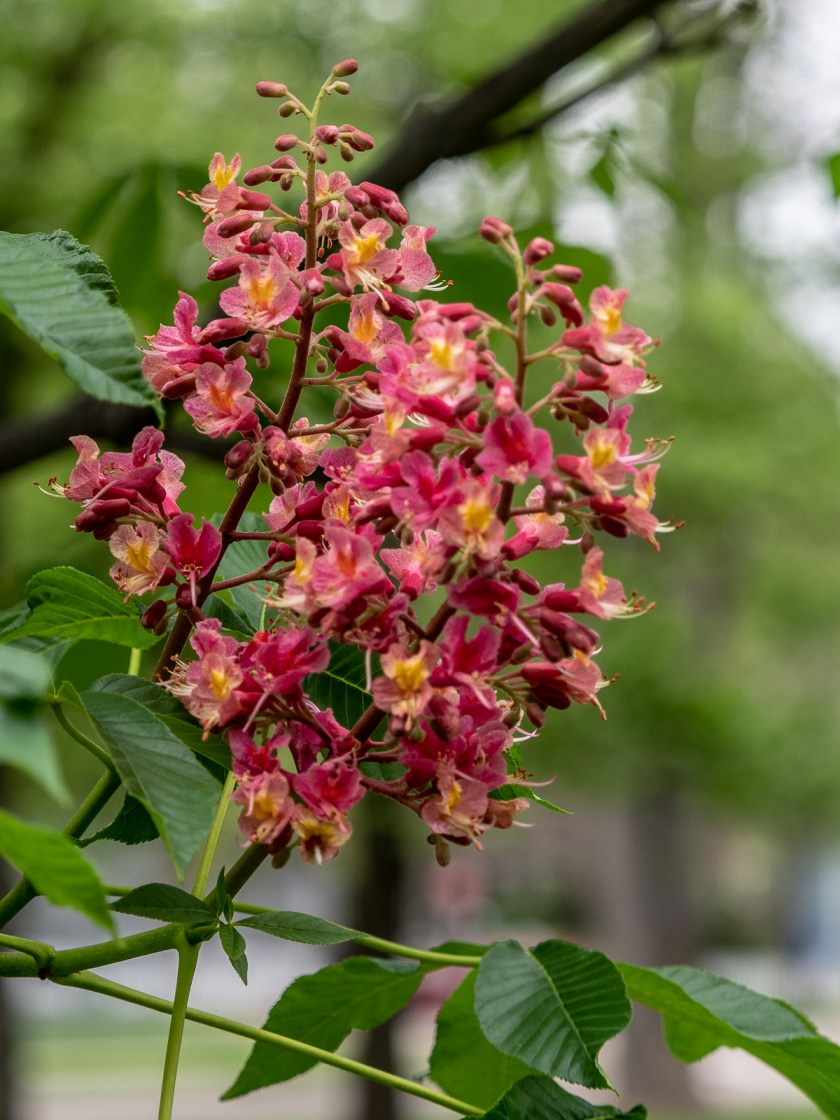
The Red Horse Chestnut (Aesculus x carnea Briottii) is a cross between a Red Buckeye and the common Horsechestnut.
The flowers are red or pink and it is the most common large red-flowering tree in temperate zones (The Sibley Guide to Trees). The flowers are quite stunning.
City Park’s Horsechestnut (Aesculus hippocastanum) (B115) can be found just west of the intersection of Jackson and Oak streets, across from 1312 W. Oak. This tree was planted in 1997 and had a diameter of about 3.5″
To locate the Red Horse Chestnut (Aesculus x crane Briotii) (A93), continue west on Oak Street to the first turn into the park. This street is a continuation of Roosevelt Avenue. The tree is one of the few deciduous trees in the NE triangle formed by Roosevelt and Sheldon Drive.
In Scotland this was once known as the Witches’ Tree
The Mayday tree is a member of the rose family, in the same genus as cherries and plums. Another common name for it is European Bird Cherry. This name gives a clue as to its origin. According to a Canadian website, it grows in countries near the Arctic but is native throughout Europe where its berries attract birds. It has been introduced in the US and is most prevalent in Alaska and parts of the east, including Canada.
The tree is grown as an ornamental in the states. It is on more than one list of preferred trees for Colorado and is included as a good choice for the Front Range by the Colorado Tree Coalition.
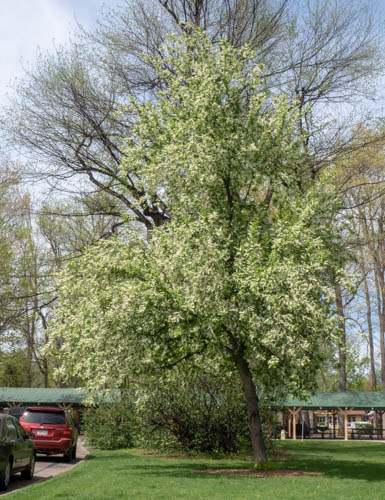
There is no doubt that it is a gorgeous tree when it blooms. It also has a distinctive, spicy smell which wafts over large areas.
Blooming Mayday Tree
The lovely scented flowers of this tree become dark colored “cherries,” also called
Flower Clusters of the Mayday Tree
chokecherries, although the berries usually eaten in the US with that name are from the same genus but a different species. These are said to be very bitter, but may still be made into jams and jellies. One source says they can be used to make cherry brandy. Mention is made that Koreans eat the boiled leaves.
The various parts of the tree have been used for the usual medicinal remedies for internal problems such as gall stones; colds, and fevers. A more unusual mention is a concoction of an eyewash for conjunctivitis. The leaves and berries may be made into green dyes, as well as a reddish dye for fishing nets. Some sources say the lumber is prized in woodworking, but the Wood Database doesn’t list it.
Although this tree does not currently appear to pose a threat to the lower 48, it has become invasive in Alaska. It may cause difficulty in growing other shade trees as well as adversely affect the willow population. Moose often feed on willow trees, possibly decreasing a food source. The leaves, twigs, and drupes contain hydrogen cyanide and can be deadly for horses and other large animals. Recently this has caused problems for moose. Eaten in small amounts, humans normally will not be harmed by the hydrogen cyanide in the berry’s seeds.
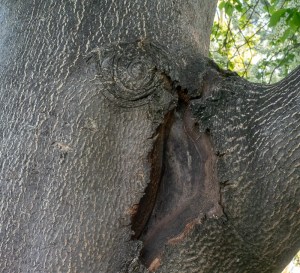
Mayday Tree bark
A photo of the trunk of the tree is included to help in identification.
D74 May Day Tree (Prunus padus) is located on S. Bryan Drive between Oak Street and City Park Drive. It is very close to the street, across from the playground. This specimen was planted in 1993.
As indicated, this tree is called variously the May Day Tree, Mayday tree, European Bird Cherry, Cluster Cherry, and Hagberry. (The Sibley Guide to Trees.) At first I thought it was named the May Day tree as the flowers bloomed around the beginning of May. After reading of the danger to native trees in Alaska and the poisoning of large mammals, I wonder of it was inadvertently given a name mimicking a call for help!
Wine glasses, fleur de lis, pencils and casket liners?
Shaggy bark of the Incense Cedar
From recent posts it might be concluded that many trees, including some of the cedars, have quite a few monikers. So why isn’t Pencil tree an alternative for the Incense Cedar (Calocedrus decurrens) ? Apparently there is something called a Pencil Tree, but it isn’t a plant that grows in the wild but instead is a slim fake Christmas tree. At least one book (North American Trees, Preston and Braham, 2002) does refer to this species as the Pencil-Cedar, but I didn’t not come across this designation elsewhere.
The Incense Cedar is native to the continent, but is only found in Oregon, California, Nevada, and Baja California. The eastern reach into Nevada may be because this tree, unlike others in the false-cypress family, doesn’t mind drier conditions. It isn’t normally found in a stand of the same species, but usually is the local specimen amongst others. Although its native habitat is limited, apparently it can be grown through much of the United States and is used as an ornamental.
Leaves looking a bit like long-stemmed wine glasses.
Descriptions of the conifer’s leaves and cones are the most poetic I’ve yet encountered. The leaves are described as resembling long-stemmed wine glasses The opened seed cones are likened to both duck bills and the fleur-de-lis. The bark, cinnamon-colored, holds interest, too, and resembles that of the Paperbark Maple but in larger shreds. For a look at some older trees around the Portland, OR area, check out this blog: http://amycampion.com/incense-cedar-not-just-another-evergreen-tree. There is also a photo of the opened cone.
The largest example of this tree is known as the Devil’s Canyon Colossus and grows in California. Other large trees can be found in Oregon. Conifers.org says there is rumor of a tree that is over 930 years old, but without supporting evidence
Like most other conifers, this one had many uses for Native Americans, most similar to those of other evergreens. Breathing the steam from the leaves was used for upper respiratory ailments and a tea from the leaves could be brewed for stomach upsets. Baskets and brooms were made from the bark and boughs. Some Californian Native Americans may also have used the leaves as a flavoring agent.
In the 1860s and 70s the species’ lumber was used extensively for goldmine flumes. Current uses include closet liners, shingles, garden benches, boardwalks. On a macabre note, the wood has also been used to line both caskets and graves. The principle current use of the lumber, though, seems to be pencils.
Pencils.com, a blog devoted to pencils, identifies Incense Cedar as the best wood for creating pencils. Other writers concur, but this wasn’t always the case. Pencils were first mass produced in Germany in 1662 and the first pencils in the New World were made in Massachusetts in1812. The first American factory opened in New York City in 1861. At first these writing implements were made of Eastern Red Cedar, but in the early 1900s, the Incense Cedar was found to have superior wood for their manufacture as it didn’t splinter easily and saw smooth.
There are plenty of odd facts about pencils, including that Napoleon wanted them as much as world domination. At one time bread crumbs were used as erasers. (Scum-X anyone?) Pencils were originally used on space flights but later banned. Many other sites include tidbits and other useless but interesting information about pencils and their history.
Although anti-dumping and other government sanctions have been applied to imported pencils from China, today the US may make fewer than 14% of the world’s pencils. Incense cedar pencils may still be purchased here, although not all those sold are manufactured in America.
To find the (B114)Incense Cedar (Calocedrus decurrens) in the Fort Collins City Park Arboretum, you could park across from the second house from the NW corner of Oak and Jackson and walk directly into the park. The tree is located along City Park Drive, not far from the Giant Sequoia. There is a doggie bag station directly under the tree. To find the tag, walk into the branches. It is fun to see the tangled pattern they create when you look upwards as well.
This particular specimen was planted in 1996 when its diameter was 3.5″.
Incense Cedar with the doggie bag station visible under and behind it.
There may be 36 or more common names for this tree!
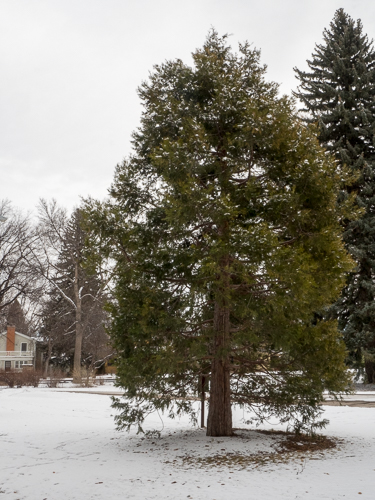
The Alaskan Cedar
TheAlaska Cedaris native to the North American continent. This tree exemplifies the classification confusion that strikes amateur tree lovers. On the City Park tour guide (revised 2015) the Alaska Cedar, also called the yellow cedar, nootka Cypress, Stinking Cypress, and Yellow-cypress, the nomenclature is given as Chamaecyparis nootkatensis. National Audubon Society Field Guide to North American Trees, Western Region (1994), and the 2002 edition of North American Trees (Preston and Graham) agree with this designation, but the Gymnosperm Database lists the same tree as Cupressus nootkatensis while The Sibley Guide to Trees (Sibley, 2009) calls it Callitropsis nootkatensis.The USDA site classifies it as Family Cupressaceae (Cypress Family), genus Callitropsis (Nootka Cypress), species Callitropsis nootkatensis. The U.S. Forest Service lists THIRTY-SIXdifferent names for this same tree! For the moment, I will just call it the Alaska Cedar and let the botanists argue. The University of British Columbia discusses this same dilemma and solves the problem by using the nomenclatureC. nootkatensis.
Although some sites list this tree as growing for 300 years, conifers.org states the oldest tree has a ring count of 1834 and lists the tallest as a specimen in British Columbia of over 200 feet. The lumber of the tree has been used for exterior purposes such as shingles, decking, and posts. A few sources mention the crushed leaves of this tree do not smell good. When used as firewood, the wood has a high BTU output. Wikipedia mentions that a tree may last 100 years as firewood! Seems like it would have to be a very large specimen, though. Some of the unusual uses it has been put to is as stadium seating and toys.
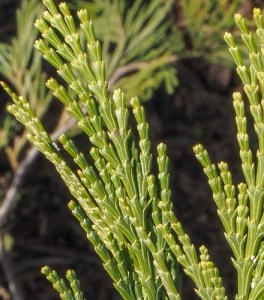
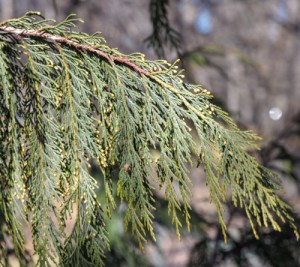
Alaska Cedar leaves
The Alaska Cedar may be another victim of climate change as a large number of these trees in Canada have died off in the last 100 years. This blog explains that the suspected cause of the die off is that these cedars have shallow roots that are susceptible to freezing, which can kill the tree. As the climate warms, the snowpack is not as deep or melts off early, leaving the roots exposed to cold night time temperatures.
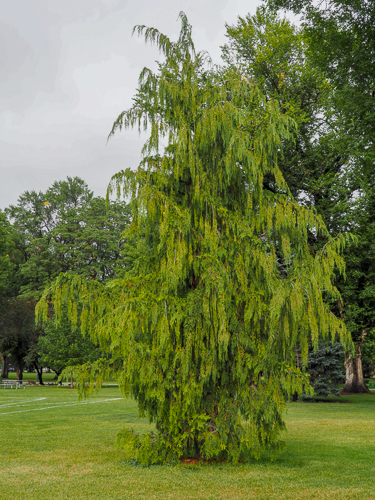
The Weeping Alaska Cedar is a cultivar usually used for landscaping purposes. For its scientific name, add Pendula to your preferred name for the Alaska Cedar. It is thought that it can be grown in most of the United States.
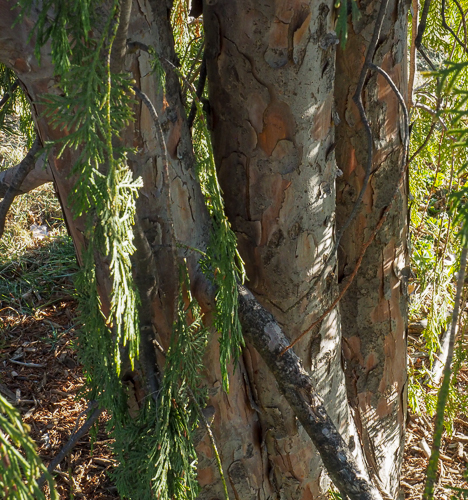
Bark of the Weeping Alaska CedarBranch showing both hard green female cones and smaller male cones.Th
The Alaska Cedar on the current Self-Guided Tour in City Park, Fort Collins, is E63. To find Chamaecyparis nootkatensis,head to Club Taco near the pool at the intersection of City Park and S. Bryan drive. This tree can be found across the street where the ditch and the fence around the miniature railroad tracks nearly form an angle. It is not known when this tree was planted.
The Weeping Alaska Cedar (Chamaecyparis nootkatensis Pendula) is located along Jackson Ave, across from 222 Jackson, near one of the exercise stations. This cultivar was planted in 1997.
An ancient Serbian saying is “Healthy as a Cornelian Cherry.”
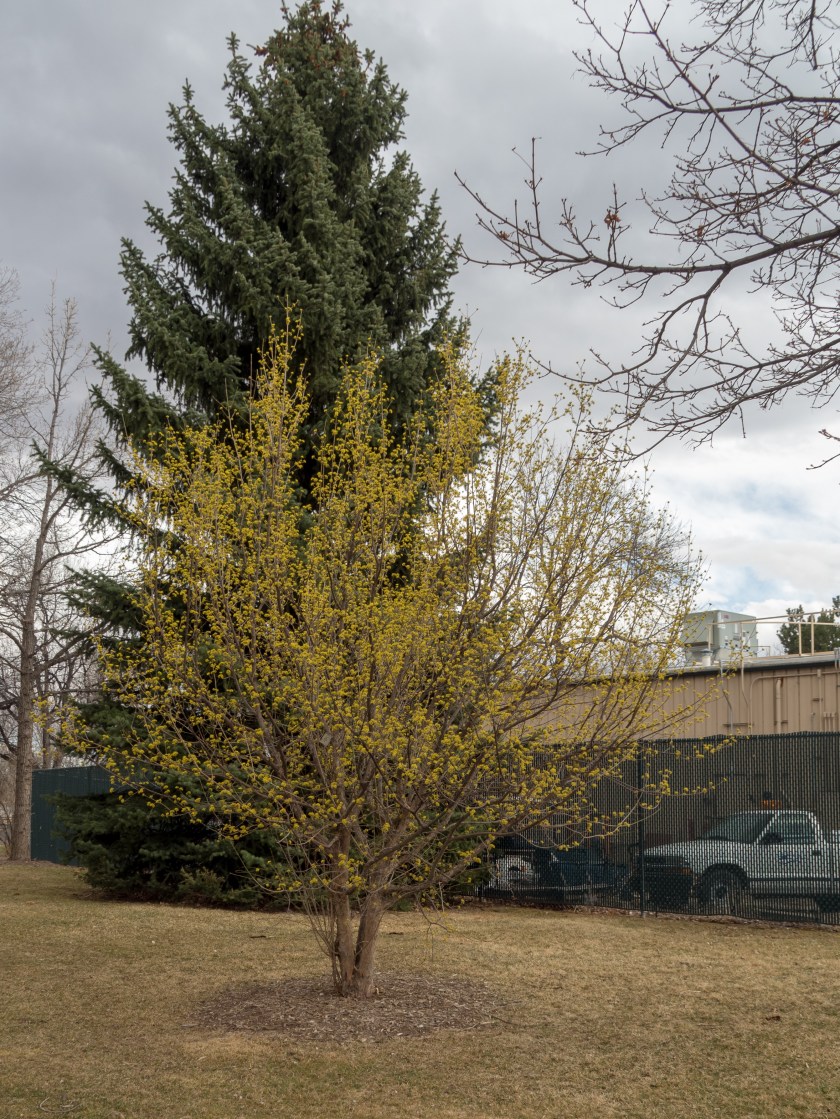
I met with Forestry Specialist Molly Roche yesterday and inquired about which trees might flower first. She responded there was already one tree in bloom! Although I’d noticed many trees starting to bud, the only flowers I’ve noticed so far have been on a tree in Denver. My casual observation is that Denver is usually two weeks to ten days ahead of us in weather-dependent events. So I was surprised but visited the tree, a Cornelian Cherry (Cornus mas), which is a member of the Dogwood family.
Cornelian Cherry in bloom March 23, 2018
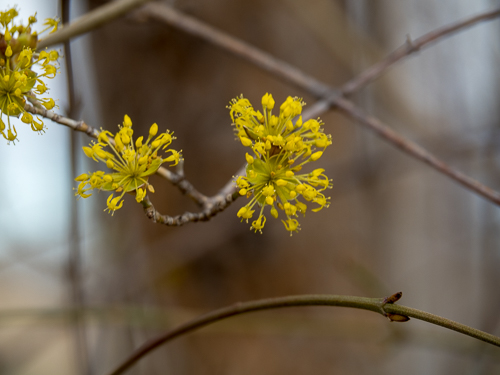
The Dogwood family is large and diverse, containing at least 120 species from small trees and shrubs to herbaceous plants. This member of the Cornaceae family originated in Asia and Europe and resembles forsythia. Apparently this plant and its fruit are bountiful in Serbia and result in an ancient saying, “healthy as a cornelian cherry.” The small yellow flowers are not particularly showy, nor did I notice a distinct odor.
Flowers of the Cornelian Cherry Tree
According to many internet sources, the cherries (drupes) are edible, nutritious, and delicious. These factors may make them a good choice for a backyard crop. A test farm in Wisconsin mentions they yield in a short time and have little tendency to be invasive. They also estimate that the plants will be viable for around fifty years, although another source calls the pit a deterrent to mass production.
Mother Earth News mentions the high vitamin C content of the cherries as a possible reason for their medicinal value. The fruit has been used for the usual intestinal complaints including cholera, as well as a cure for symptoms such as tinnitus. Medicinal Herbs suggests an oil can be distilled from seeds and a dye may be acquired from the bark. The wood may also have been fashioned into bows and spears.
Although some cultures thought the wild cherries fit only for pigs, the fruit has been eaten for centuries. Similar to juniper berries in gin, the dried cherries are added to vodka and wine in Russia. There is an alcoholic beverage from Albania, raki, which uses the fruit. Cherries can be made into preserves, into a cranberry-like sauce, and are used in Persian cuisine. Recipes for various sorts of syrups, jams and other preparations can be found on the web.
Location in City Park. Depending on the time of year, E10 Cornelian Cherry (Cornus mas) may be very easy to find as it could be the only tree flowering in the park. From South Bryan Avenue, take the road on the side of the Fire Station. This drive leads to the Park Shop and the golf course parking lot. (On maps S. Bryan and City Park Drive appear to merge into the same street.) On the S side of the road more or less in front of the Park Shop building, there are two small trees. The one to the W is the Cornelian Cherry. Its tag currently is easy to find, although there are actually two separate identifiers on the tree. On 3/23/18 they did contradict each other, but the yellow flowers of the tree are the giveaway: This is the Cornelian Cherry.
Trees in genus Cedras are often called the true cedars.
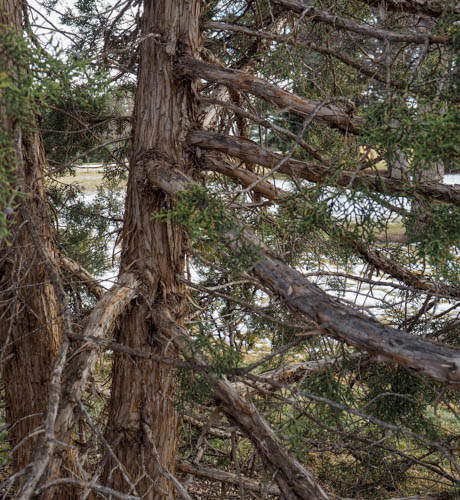
Through the branches of an Eastern Red Cedar
So far I’ve covered over forty trees and I’m up to the cedars. I’d counted five tagged on the self-guided tour, but it turns out that I didn’t look closely enough as one of those trees with the common name of CEDAR is actually a juniper. The other four belong to three different genus/families even though they all share the common name of cedar. Misnaming trees from the Latin to the vernacular makes tree identification difficult! Another problem is the multiple spellings for the same tree. Red Cedar or Redcedar?
Six of the types of conifers discussed so far have been in order Pinales, family Pinaceae. Arborvitae, the Giant Sequoia, and Junipers belong to order Cupressales, family Cupressaceae. All of these belong to the subclass Pinidae, commonly referred to as Conifers. (From The Gymnosperm Database.)
The Eastern Red Cedar(Juniperus virginiana) was used in ways similar to the other junipers discussed previously. According to the USDA map, this is one of the most widely distributed native conifers on the continent as the usual eastern block extends to Colorado and also includes Oregon. Interestingly, Eastern red cedar is not included in Flora of Colorado (Ackerfield, 2015). Red cedar is said to have very durable wood and was used to make lances, bows, and multipurpose mats.
Lumber from Redcedar used as flooringBark of the Eastern red cedar
The wood has been valued for its rot-resistant properties. Today the wood is often used for its aromatic properties. It is used to line closest and cedar chests and was once used to make pencils. Occasionally in the south it is still used as a Christmas tree.
The US champion Eastern Redcedar is a tree in Georgia that has overall points of 310, but is only 57 feet tall. The champion Eastern Redcedar in Colorado is in Denver but doesn’t even score half the points of the national champion. It is, though, taller at a height of sixty feet. Sources differ on the age of these trees, with some saying 900 years and others 500.
To find A77Eastern Red Cedar (Juniperus virginiana), drive to the pottery studio, which is on the corner of Oak and S. Bryan. You can see the trees in front of the building.
Eastern Red Cedars in front of the Pottery Studio
The Himalayan Cedar(Cedras deodara Karl Fuchs) belongs to the genus Cedras. The trees in this group are often referred to as true cedars.Cedras Deodara is native to India and Pakistan. The USDA map indicates they have only been introduced in three southern states.*
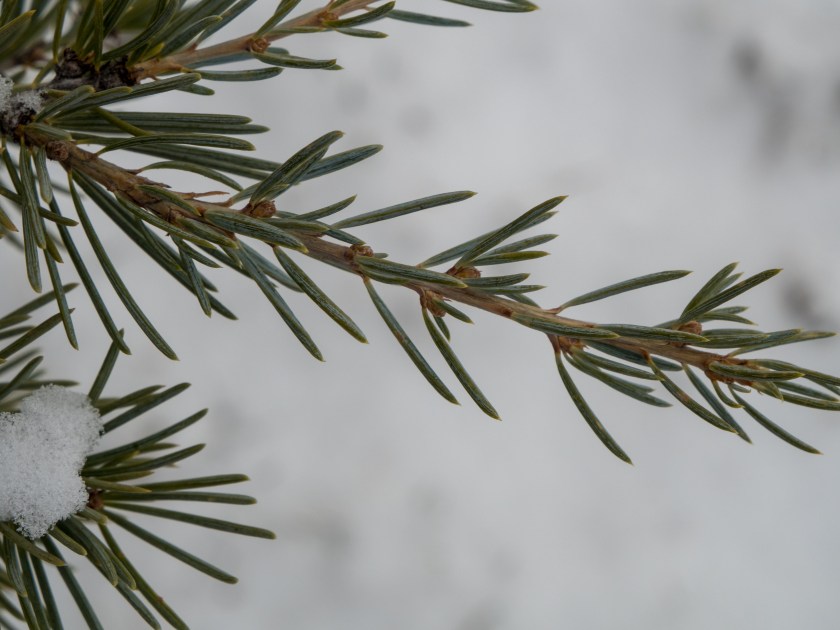
Even though this is a true cedar, compared to the other trees listed as cedars, it is somewhat deceiving as the leaves (needles) might look to the casual observer as belonging to a spruce or pine.
Himalayan Cedar needles
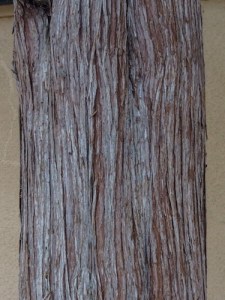
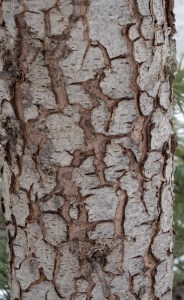
The bark looks different from that of the Eastern Red Cedar.
Bark of the Himalayan Cedar
According to the Arbor Day Foundation, the name of the tree in Sanskrit means “Timber of the Gods,” and it was introduced into Europe and America in the early 1800s. The site also mentions that an oil the tree produces has insect repelling qualities. Virginia Tech Dendrology states the tree is planted as an ornamental in zones 7 and 8. It mentions it is often mistaken for European Larch and Atlas Cedar. The cultivar Karl Fuchs was developed in Germany in the 1970s.
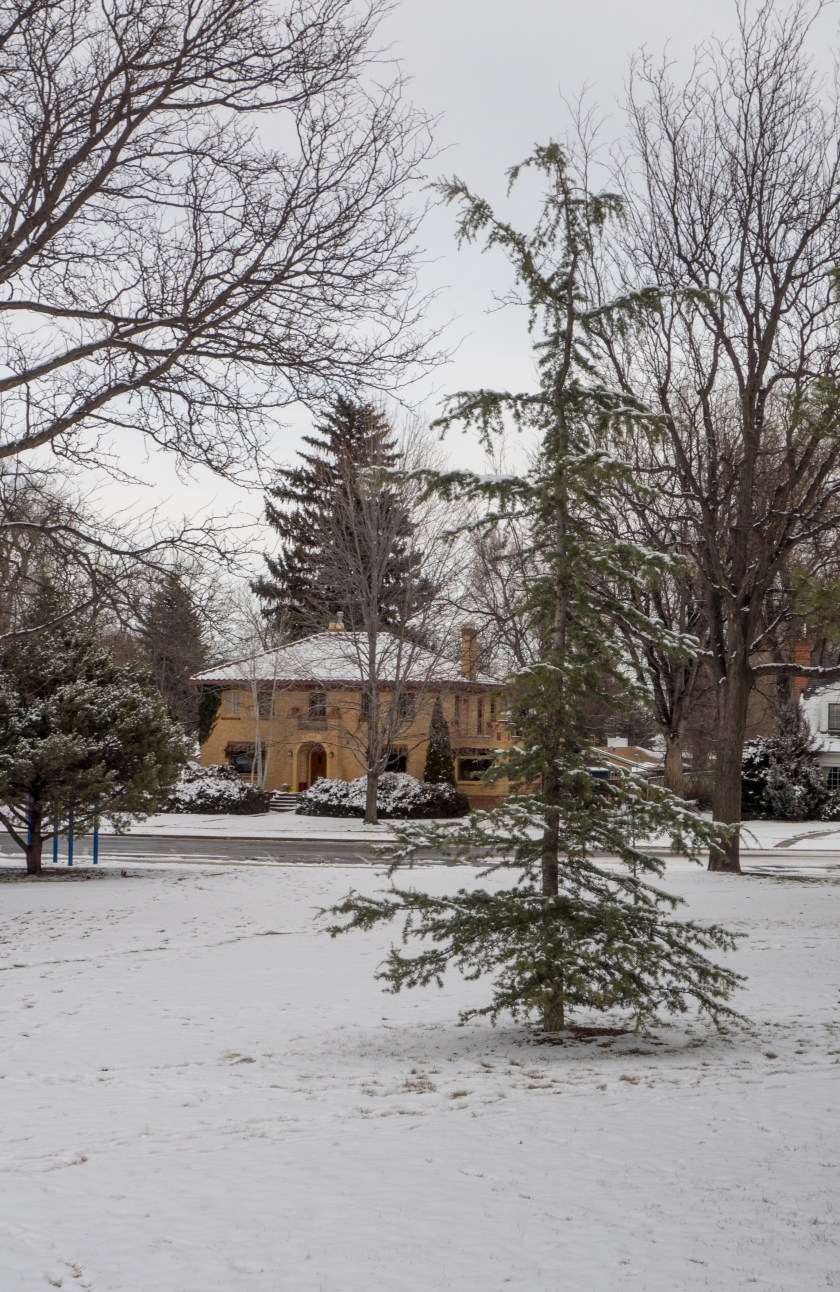
The Himalayan Cedar (Cedras deodara Karl Fuchs)
Tree C143 can be found along Jackson Avenue, about midway between W. Olive and W. Magnolia Street. As can be seen from the photo above, it is a little way into the park and not directly along the street.
Next post: Alaskan and Incense Cedar
*So far I have not been able to pin down the meaning of “introduced” vs “native” as there appear to be trees that are planted in areas other than where they are native or have been introduced. (Possibly introduced means once the seeds have been planted, the trees are able to spread without the help of humans? This is also often referred to as an invasive species, but not all introduced species are problems as they do not take over or compete with native species. Other non-native trees are referred to as exotics and possibly they are single specimens which thrive but have no way to reproduce and spread? This is a hypothesis on my part and in no way verified.
The leaves of this tree are sharp enough they hurt!
No big surprise, but Giant Sequoias are only native to California. This species of the Cupressaceae family is the only member of its genus Sequoiadendron. The trees are also called big tree and Sierra Redwood. They are so large, they often have monikers. The largest standing today is the General Sherman which has a volume of 52,500 cubic feet and is over 274 feet tall. Due to their height and trunk volume, these trees are often referred to as the largest living things on earth. General Sherman is not the tallest known Giant Sequoia. The tallest is said to be over 300 feet and grows in a known grove but the exact tree is not specified. Sequoias may also be some of the most long-lived, as the oldest one by stump count in 1870 was 3266 years.
As this tree grows fast even in old age, it is possible the General Sherman will get both taller and wider! Although Giant Sequoias would provide a lot of wood per tree, most of them are protected. Once used for fenceposts, their wood is rot resistant but also brittle, making it less than ideal for building. The local Native Americans, members of the Tule River Tribe, did use the wood for fenceposts and crafts, but instead of felling the trees, they utilized downed wood. After the white man discovered the Sequoia, many were lumbered, eventually leading the preserved groves to be added to the National Park System.
North American Trees (Preston and Braham, 2002) mention that a “dark red pigment in ink” can be obtained from the cones. One advantage of having a smaller tree in the park is you can feel the leaves, which I think are the prickliest of the conifers. They hurt!
Pointed leaves of the sequoia
This short video discusses the lifecycle of the sequoias. At one time the conditions for these trees to grow may have existed as far east as Colorado. Changes to the climate affecting California may not bode well for the Sequoias as well as other other trees. In 2017 the Pioneer Cabin Tree, which you could drive through, fell during a severe rainstorm.
The young Giant Sequoia
Sequoias have been planted elsewhere in the world, including Denmark and France. In the mid 1800s, Giant Sequoias were a popular addition to English castle gardens, where conditions appear to be ideal. Some of the largest specimens in Europe can be found in Great Britain. In the relatively few tree-years since then, some specimens have acquired height of around half the tallest in the US. Another group of trees which were planted in Denmark to help with reforestation, where killed in the winter of 1942. Today many visitors from around the world take home seeds to grow the trees.
To find B116 Giant Sequoia (Sequoiadendron giganteum) go to the triangle formed at Oak, Jackson, and City Park. In this area is a stone bench. If you were to sit on the bench facing south you would be looking toward the Giant Sequoia, which is parallel to the lamp post.
Want a suggestion on how to make a Bloody Mary without alcohol?
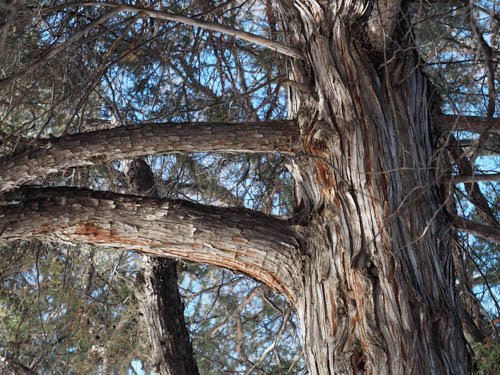
Bark of the Rocky Mountain Juniper
Juniperus is the largest of the genus in family Cupressaceae and consists of at least 55 species. Four species are mapped in City Park. Four species are also native to Colorado, three of which are marked in the park. The fourth, Juniperus communis is a low-spreading shrub. (Flora of Colorado, Ackerfield, 2015.)
The junipers, often mistakenly called cedars, were used by many Native American tribes. Rocky Mountain Juniper branches were used for purification, the red colored wood for lance shafts and bows. The Cheyenne were said to prize the wood for flutes. The boughs were used to line sweat lodges, and a few tribes bathed their horses in water steeped with juniper to give their coats a high sheen. It may also have been a dandruff deterrent.
The berries, which are actually the seed cones of the plant, could be dried and strung for necklaces. An ingenious way of producing a hole in the berry was to allow ants to eat out the sweet inner core. Smoked they turned black. Dyes can be made from the roots and berries. One source mentions that the wood is used in making pencils.
Mythology says that juniper boughs have been used to ward off devils and witches, while dreaming of the berries had symbolic meaning. Giving berries as gifts conferred honor on the recipient.
Of course, there were numerous uses of the berries as both food and medicine, but not only in Native American cuisine. In Europe they are used to flavor German sauerkraut and Swedish pickles, as well as to cut the gaminess of venison and other meats. One of the best known uses for juniper berries is in making gin. Edible & Medicinal Plants of the Rockies (Kershaw, 2000) includes an easy recipe for making a Tricky Mary, a virgin Bloody Mary in which you allow juniper berries to flavor tomato juice.
Medicinal uses include the ubiquitous cure for a cold and other chest aliments, as a digestive aid, and for inflammation. According to Edible & Medicianal Plants of the Rockies a berry tea has been used to prevent pregnancy and also as a hunger suppressant. The berries were used by practitioners in the Middle Ages to help ward off Black Death.
At the same time that many books and sites on the Internet provide recipe ideas for the berries, most also warn against large doses, especially for pregnant women. Edible and Medicinal Plants of the Rockies warns that over ingesting can result in convulsions and kidney failure while oil applied topically may case blistering. Even those who tout natural remedies warn against eating the berries without knowing what you are doing. At least one species is identified as a known toxin.
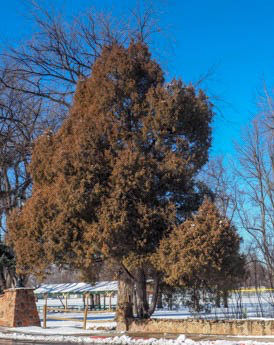
Rocky Mountain Juniper(Juniperus scopulorum) is native throughout Colorado other than the most eastern counties. Trees can grow even in Weld and Logan counties. Rocky Mountain Juniper grow through most western states except California. One clue to its habitat range may be that it does not tolerate high humidity. This species was used in ways similar to the general discussion above.
Rocky Mountain Juniper
The twigs and branches of Juniperus scopulorum are an important food source for the elk and deer of the region, while the berries are an important part of the diet of many smaller males and bird.
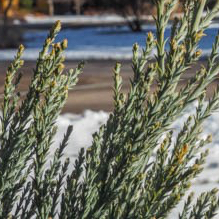
Twigs and leaves of Rocky Mountain Juniper
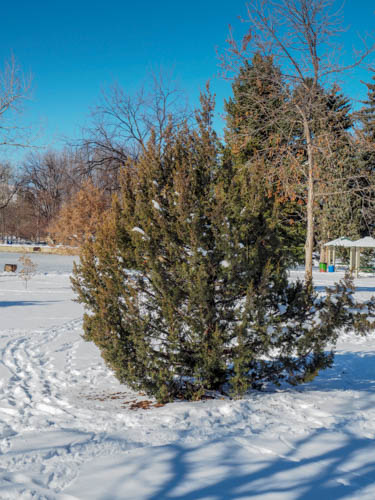
The One-Seed Juniper is native to the American Southwest. Its range includes southwest Colorado (Flora of Colorado, Ackerfield, 2015). Its name is derived from the fact that its cones (berries) normally have but one seed each. The plant is common in the higher elevations of New Mexico and due to its long tap root, is able to survive in drier areas. The Santa Fe Botanic Gardens Newslettersays the ash from this tree is still used in Navajo wool dyeing as well as part of traditional Pueblo food recipes. The branches and smoke from burning juniper are also part of various ceremonies. Other sources mention that the bark was used to make mats and cloth.
One-seed JuniperLeaves and cones of the One-seed Juniper
The Utah Juniper grows naturally in nine of the western states, including Colorado. Again, it is not native to Larimer County. Canyonlands National Parks says this “indomitable Juniper” can grow in “an environment of baking heat, bone-chilling cold, intense sunlight, little water and fierce winds.”
The Alpine Nature Center in Alpine, Utah, provides a chart of the differences between the Rocky Mountain Juniper and the Utah Juniper.
Utah Juniper
Most of the distinguishing characteristics are related to color and shape. For instance, the bark of the Rocky Mountain juniper has a reddish hue while that of the Utah is more gray. This is barely discernible in the photos accompanying this post. The biggest difference might be that both male and female cones are born on the Utah Juniper while the Rocky Mountain junipers have distinct male and female trees. The aforementioned site claims a yeast in the berries is what is important to the gin making process. It also includes a recipe using juniper berries as the starter for a sourdough!
The grayer bark of the Utah Juniper
I’ve been aware of a literary journal called Alligator Juniperfor some time and always thought it was an odd name until I learned it was named after the Alligator Juniper tree.
Alligator Juniper
Its habitat in the US includes only Arizona, New Mexico, and Texas. One look at its bark, and it is easy to understand where it got its name.
The patchy, scaly bark of the Alligator Juniper
This species has both male and female trees, with only the berries/cones on the female tree worth eating. The male pollen cones are the reason this tree is listed as a moderate allergen.
Male pollen cones on the Alligator Juniper three
According to a post about the trees in Texas, this is a slow grower. One interesting study of the effects of climate change has shown that the Alligator Juniper has “crept” to higher elevations over the last fifty years.
The mentioned uses of the berries and other parts of the tree coincide with those of other junipers, although some reports for this specific species mention how strong the juniper taste is. For those of you interested in boutique spirits, at least one company is making a gin with Alligator Juniper berries known as Mt. Lemmon Gin. The Zuni use it as incense.
How to find the Junipers:
E60: Rocky Mountain Juniper (Juniperus scopulorum) Find the tagged specimen on the other side of the fence in front of the miniature train station. It is across from Club Tico on City Park Drive.
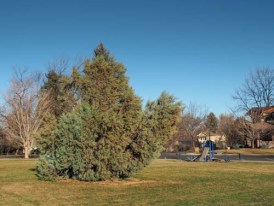
D199 One-seed Juniper (Juniperus monosperma). This tree is located along the east side of Sheldon Lake between the lake and the road, near the Douglas Fir and the frog statues. One author mentioned that One-seed Junipers look somewhat like Arborvitae, so look for a squat conifer.
C127 Utah Juniper (Juniperus osteosperma). This specimen is located between playing fields on the S side of City Park Drive as you head toward the Jackson Street exit. If you are driving east from the junipers mentioned above, cross Sheldon Drive and park about two-thirds of the way to the exit, near a group of trees that are encircled with bricks. You will need to walk as the tree is a short distance from the road. I was not able to locate the tag, but after reading that the Utah juniper produces both seed cones (berries) and pollen cones, it seemed obvious that this is the correct tree.
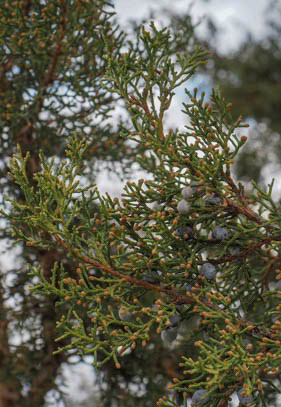
Look closely to see the brown pollen and the blue seed cones of the Utah Juniper
To find C157, Alligator Juniper (Juniperus deppeana), you could walk south from the Utah Juniper toward the corner of W. Mulberry and Jackson to a small clump of trees. You could also drive and park just S of the intersection of W. Magnolia and Jackson. This smaller conifer seems set off by itself. To find the tag, you need to walk into the branches.
What do Harry Potter and Arborvitae have in common?
I swear I never heard of Arborvitae until this year, but when I stop to think about it, I believe we had some growing in our front yard until we took them out to change the landscape. They were annoying. The branches bent under heavy snow or ice. Arborvitae are native to the eastern United States and Canada where they may be called Eastern White Cedar or Northern White Cedar.
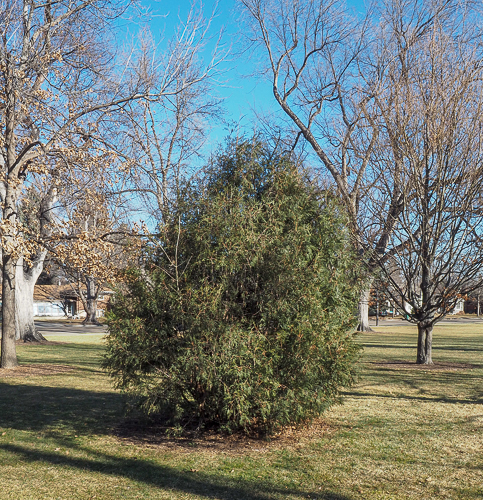
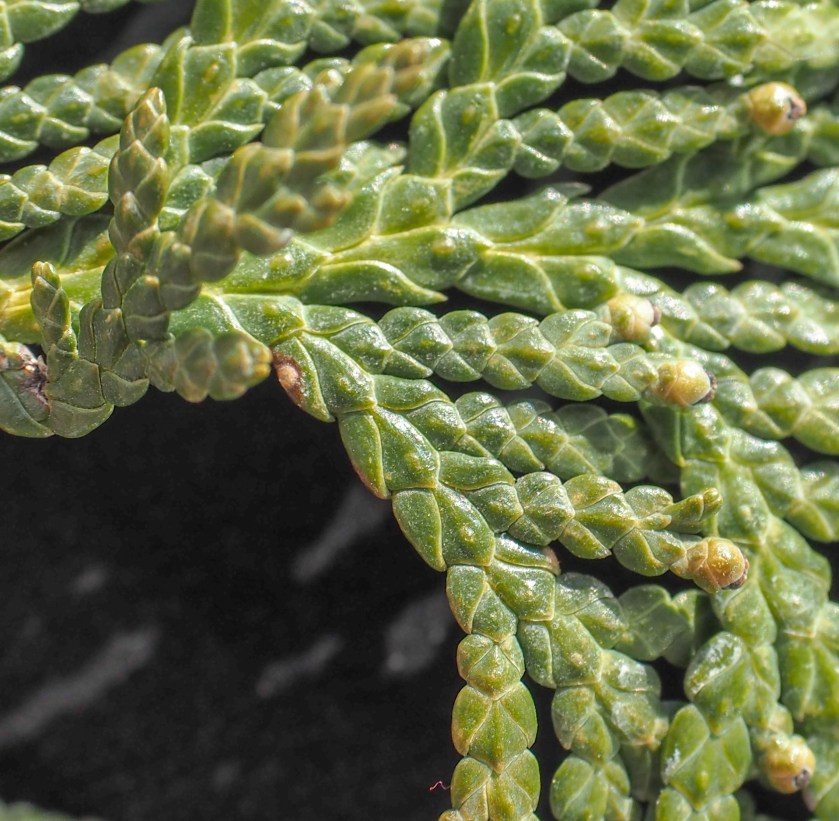
Thuja occidentalis Brandon
Arborvitae means tree of life in Latin, but unfortunately, in common parlance, other varieties of trees are referred to as the tree of life. The baobab and coconut both may carry that appellation while a specific mesquite tree in Bahrain also is called that.
Thuja occidentalis may have been the first specimen tree to be transported and transplanted to Europe and has been grown there since the 1500s. It was given the name Tree of Life when Jacques Cartier learned from the Iroquois that a tea made from its leaves would cure his men of scurvy. There are five species in the genus, but only two of them are native to North America. The other three species are native to Asia.
Native Americans not only used the leaves for the nourishing tea, but as bedding, and the lumber was used as canoe frames. Many parts of the tree were used for other medicinal purposes, including as an abortifacient. Log cabins have been built from larger specimens, partly due to the wood’s insulating properties and rot resistance. This last property also contributes to the wood’s use as fence posts. Arborvitae are important for wildlife as both a food source and shelter.
Although today this species is most often used in the landscape, it can be a long-lived tree with one of the oldest known thought to be over 1000 years. The Wintergreen Arborvitae variety seems especially well suited as a privacy screen while other varieties planted in a row are used for windbreaks.
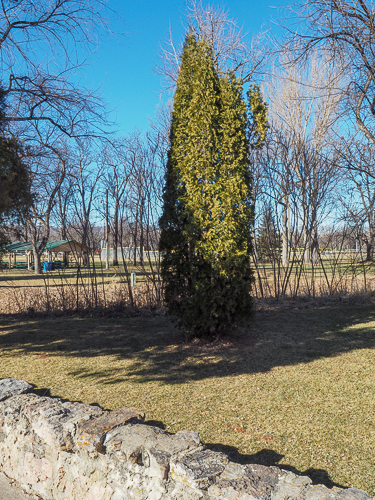
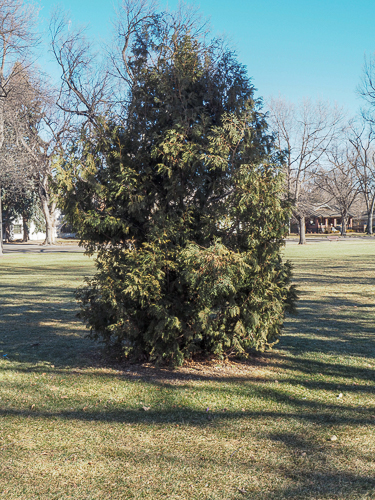
A lone Wintergreen Arbor Vitae
According to some sources, the tree has antibacterial, anti-fungal, and anti-viral components. Alternative medicine practitioners may suggest its use during radiation. An essential oil is made from its steam distillate, which is most commonly used to burn off warts. According to the site cited above, the essential oil is up to 65% thujone, Thujone, also a component of absinthe, is considered toxic and the use of the oil, especially ingested, is not recommended. Apparently thujone is mentioned in at least one of the Harry Potter books and caused quite a stir with the religious right!
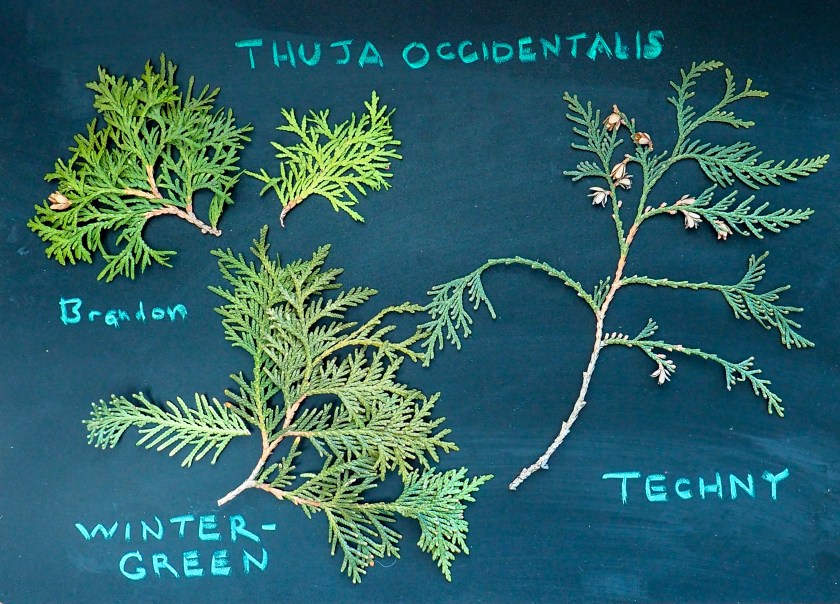
Two of the three arborvitae in City Park are near each other. A94 Wintergreen Arborvitae (Thuja occidentalis Hertz Wintergreen ) and B96 Techny Arborvitae (Thuja occidentalis Techny) are located along Roosevelt Drive between Oak Street and City Park Drive. Both are in the field on the east side, across from the trolley station and tennis courts. The Wintergreen Arborvitae is closer to City Park Drive, near the tall conifers. The Techny is directly across from the trolley station.
Techny Arborvitae
The third tree, E62 Brandon Arborvitae (Thuja occidentalis Brandon) is between the ditch and the miniature Train Station, just past the rock wall that runs along City Park Drive, across from Tico’s.



 Sibley reports the interior yellow spots turn red when fertilized. The fertilized flowers produce what are known as conkers, or the “nut.” This is NOT the same as a sweet chestnut, and the outer casings look quite different. The two should not be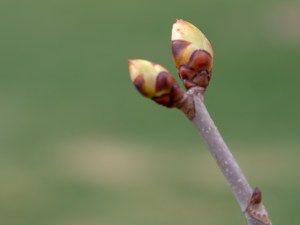














 What Tree Where